
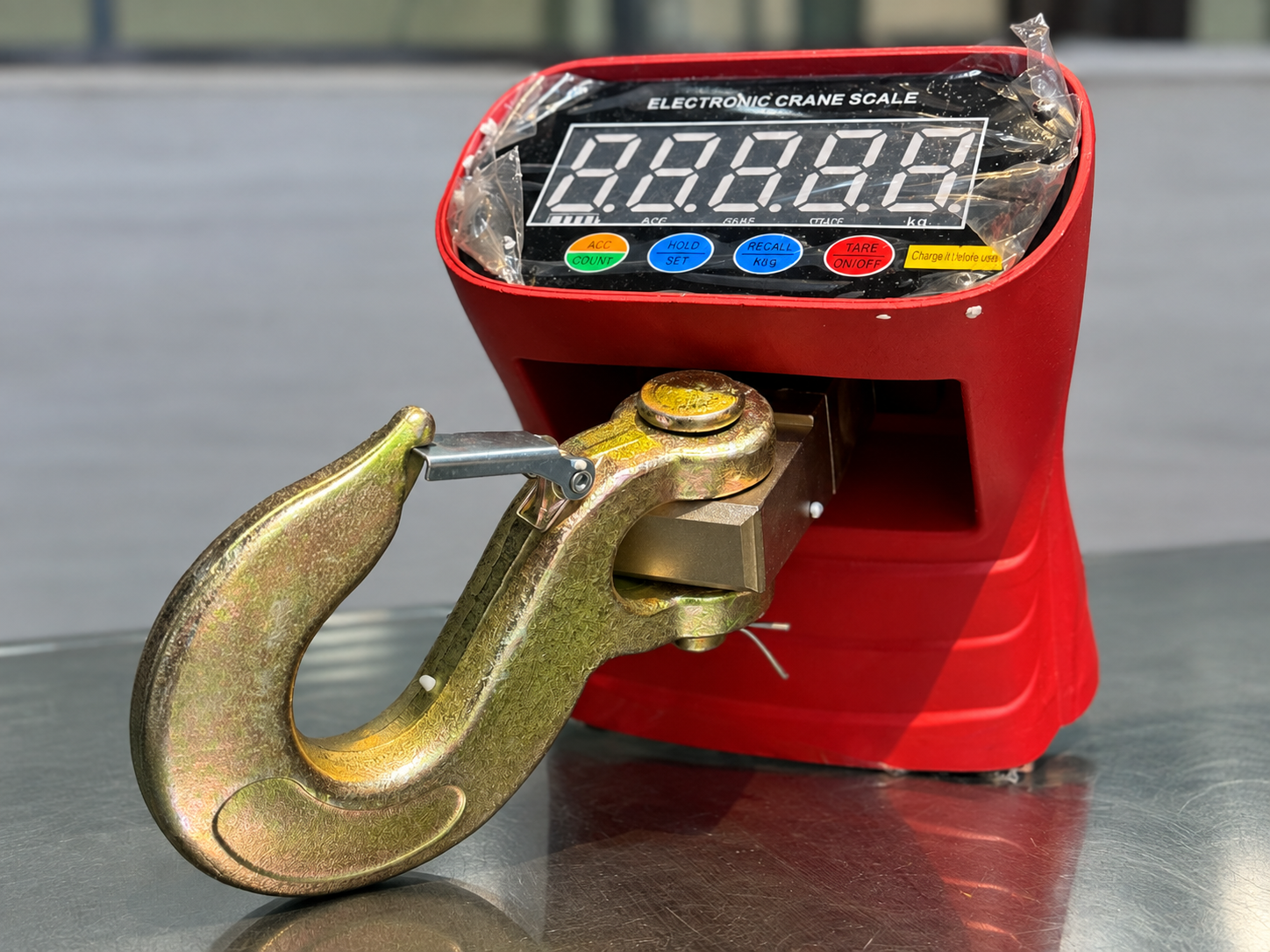
Crane Scale
A crane scale (also known as a hanging scale or dynamometer) is a specialized weighing device designed to measure the weight of a load as it is being lifted by a crane, hoist, or other lifting equipment.
Key Points
- Purpose: To determine the weight of heavy, bulky, or awkwardly shaped items that cannot easily be weighed on traditional platform scales.
- Mechanism: Typically incorporates a load cell. When a load is suspended, the load cell deforms slightly, and this deformation is converted into an electrical signal, which is then processed and displayed as a weight reading (usually digital).
Components
- Load Cell: The core sensing element.
- Shackle/Hook: Top shackle attaches to the crane hook; bottom hook holds the load.
- Display: Shows the weight (often LED or LCD). Can be integrated or remote.
- Housing: Protects internal components, often rugged for industrial environments.
- Controls: For taring, unit conversion, hold function, etc.
Key Benefits
Safety
Helps prevent overloading of cranes and lifting equipment.
Efficiency
Allows weighing during the lifting/moving process, saving time and steps.
Accuracy
Provides precise weight data for inventory, shipping, billing, and process control.
Versatility
It can handle a wide range of load types and sizes.
Technical Specifications
| Platform Size (Meters) | Capacity (Tons) | Number of Load Cells | No. of Platform Modules |
| 8 x 3 m, 12 x 3 m, 15 x 3 m, etc. | 40t to 100t | 4 to 8 | 1, 2 and 3 |
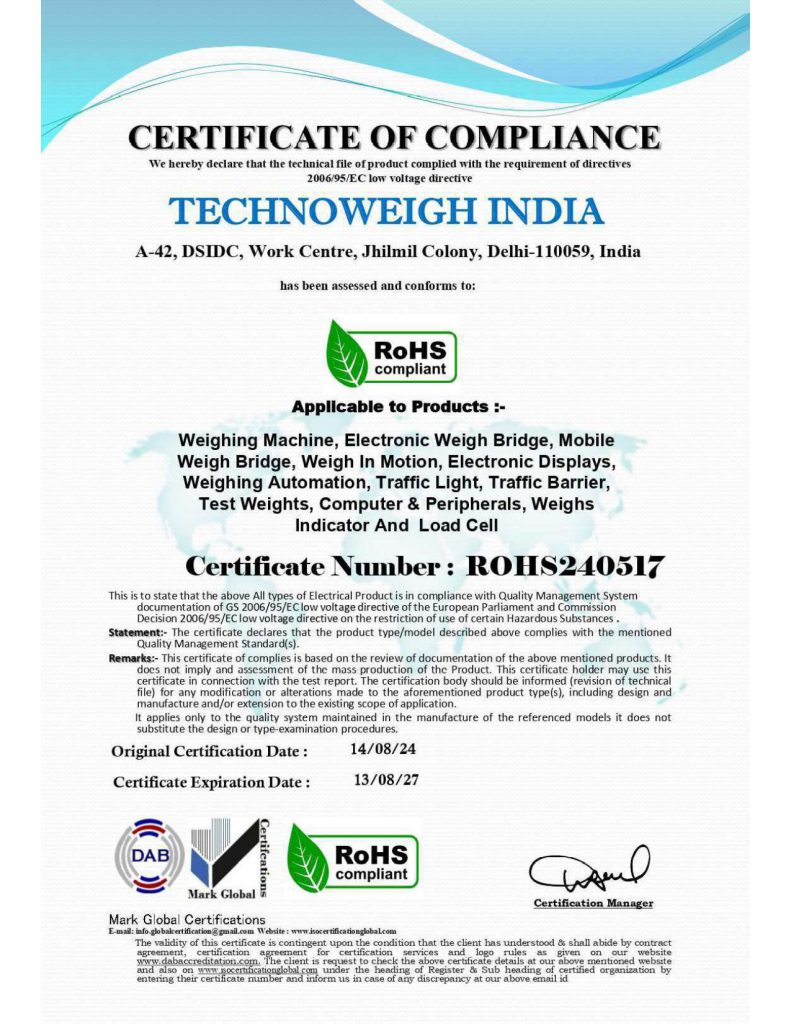
Our Certificates





Our Customers