



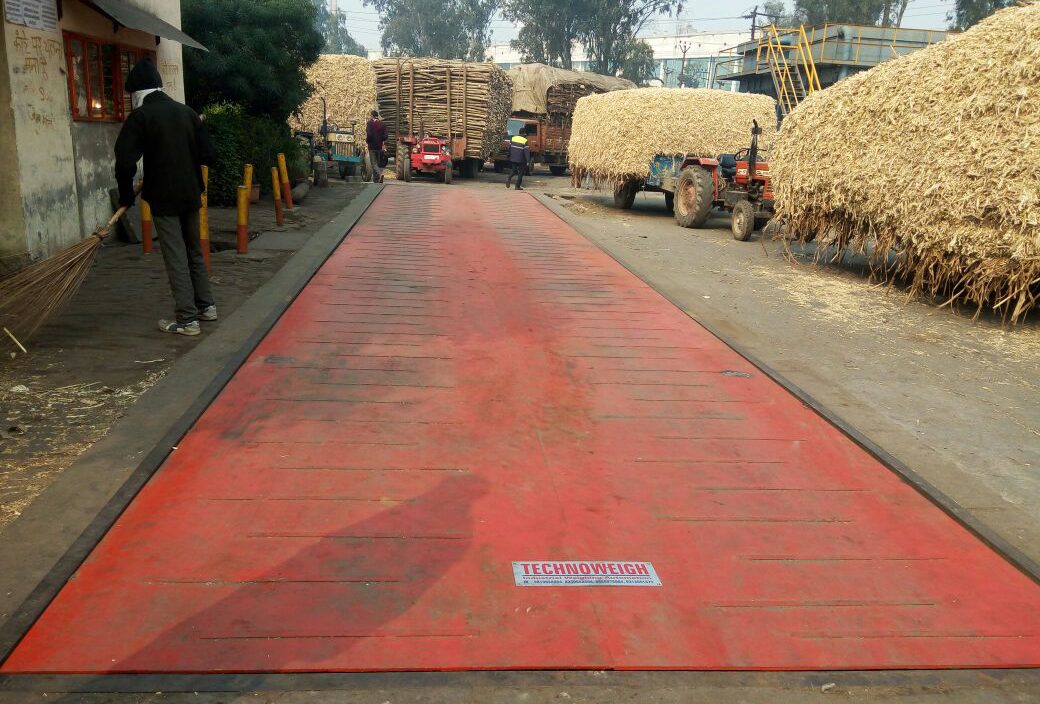
Indian industries prefer electronic weighbridges or a digital weighbridges over older mechanical ones because they are more accurate, faster, easier to automate and simpler to keep compliant. Load cells send the weight straight to a digital indicator, so there are no worn levers to adjust and no manual readings to get wrong.
Picture a plant gate at 11 am. Trucks line up, someone notes weights in a register, and a driver keeps asking what is taking so long. When billing depends on weight, one error or a long delay costs real money.
Why plants make the switch
Accuracy comes first. Lever systems wear down and drift, while load cells hold their readings, which matters in steel, cement, mining and agriculture, where payment follows the number on the slip.
Speed follows. The truck drives on, the weight shows, the slip prints, and the gate queue shrinks.
Then there is automation. Digital weighbridges pair with RFID tags, ANPR cameras, and boom barriers, so even an unmanned gate can run smoothly, and weights can flow into billing or ERP software like SAP without anyone retyping them.
Every weighment also gets a time stamp, and with cameras, a photo. That makes it much harder to fudge a weight or run the same truck twice.
Compliance matters too. Overloaded vehicles damage roads and attract fines, and Legal Metrology rules require weighbridges to be verified and stamped. Checking loads at your own gate keeps you covered.
Electronic or digital: is there a difference?
Not much in daily use. Both rely on load cells and a digital display. Electronic usually points to the sensing technology, digital to the display and data side, and many suppliers use them almost interchangeably.
Keeping it accurate
Keep the platform clean, check that it returns to zero with no load, calibrate on schedule, and recheck the balance after heavy rain. Pit-type units also need a pump ready in case water collects.
Choosing the right one
Pit-type models sit level with the ground, pitless ones need less civil work and drain better, and mobile units suit temporary sites. Start with vehicle capacity, platform size and available space.
After installation, keep the platform clean, check the zero reading, calibrate on schedule, and recheck the balance after heavy rain. Pit-type units also need a pump ready in case water collects. Whichever type you pick, ask for the load cell details, Legal Metrology verification and after-sales support before you buy.